Like the Reblochon, a soft washed-rind cheese from the French Alps, this buchons [small bistro] is known for simple, fresh dishes that add a luxurious touch to our northern part of town.
France is known for many things. The fabulous fashion style, its magnificent culture, and its delicious cuisine. Find yourself staring at photos of Parisian women and wondering how they always look so perfect. [Their secret is they develop a signature look and stick with it.] Google the map of France and select the sprawling southern city of Lyon, which is the gastronomic capital of France and the world, and you’re likely to book the first plane flight out to France. Don’t worry, you aren’t alone.
Coincidentally, you don’t have to travel far to get a true taste of France. Always looking for the story behind a name, I stopped for lunch at Bistro Bistro in Northwood Village, less than two miles north of Downtown West Palm Beach.
Bistro Bistro is what the French call a buchon, a tiny bistro or family-run establishment, lacking in style and décor but infused with a welcoming, home-style atmosphere. These bouchons are typically found in Lyon, France, and serve traditional Lyonnaise cuisine.
Here at Bistro Bistro, they serve a nice creation of Assiette de Charcuterie [cheeses and cold cuts] plus pates, soups, salads, quiches, and paninis like the French classic Croque Monsieur, which is prepared with their homemade butter brioche bread, Béchamel Sauce, Swiss and American Cheese, and served with a cup of soup or a small house salad. Their Casse Croutes [sandwiches] are simply delicious, all made with crispy French baguettes. The bakery side of this buchons does not disappoint either. Here you can select from a variety of Croissants and divine desserts like Crème Brulee, fruit tarts, nut breads, and cakes.
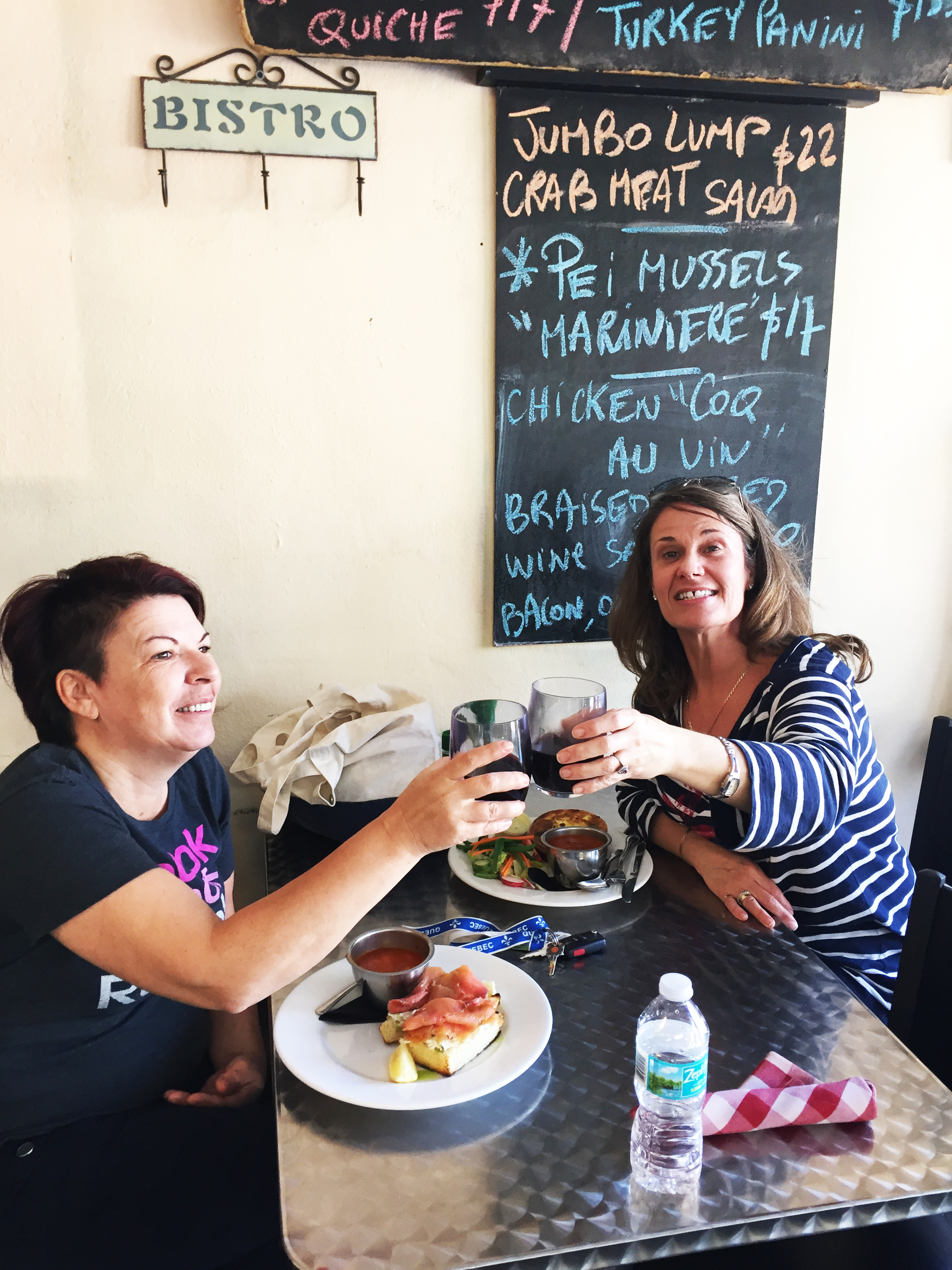
Upon entering the bistro, a black chalkboard showcases the day’s specials, from Coq Au Vin, Beef Burgundy, Lamb Shank Provencal, Tartiflette, Chicken Poc Pie, Meat Pie, Pork Shank, Mussels, Paella, Seafood Crepes, and more. This is classic, simple Lyonnaise food at modest prices. At a glance, you can see there’s a medley of pastry-based desserts and savory appetizers—the essentials of any French bistro, and not as fattening as you might think!
My friend and I started with the barley soup, which I was told was divine. Next, I had the spinach quiche as a main, and he had the Jambon Beurre, a crispy baguette with Black Forrest ham and cheese, made with butter and Cornichons. My friend raved about his sandwich, and my quiche was fantastic, flavorful, and possibly the best I’ve ever had. Oh, and the bread was out of this world, which is saying something, me being Cuban and all. We were too full for dessert but the fruit tarts passing by our table looked lovely—simply too hard to resist.
Like any Lyonnaise bouchon, Bistro Bistro is a bit of a stereotype, but for good reason—it is widely known for its friendly atmosphere and personal relationships with the owners, Carole and Alain Gallant.
If you visit Bistro Bistro, you might want to sample one of their creamy soups or any of the variety of quiches they offer. You will be surprised at their gourmet cuisine, which does not conform to the traditional French cooking, which uses heavy cream and lots of butter, but rather relies on the taste of fresh ingredients.
No French meal is complete without wine. Most restaurants in Lyon serve regional wines, which are likely to be either Beaujolais or Côtes du Rhône. These come in great selections, ranging from white, rosé, or red, and at Bistro Bistro, that’s what you’ll find.
In France, good conversation is as good as good food. So, in keeping with its culture, which is very similar to mine, I got the chance to indulge in some fine French fare and get close and personal with Carole Gallant, the loquacious chef of Bistro Bistro.
,
The Interview
MC: What inspired you to open Bistro Bistro in Northwood Village?
CG: We opened the restaurant eight years ago because it was very much like the bistros that we have in Lyon, France, and in Canada, where I grew up. I love it here because the streets are small and cozy, with eclectic buildings—no two are the same. At the time we moved here, the rent was also very affordable. We love the cachet of it. When you go around the neighborhood, and you see all those beautiful houses, it’s a very particular area that attracts you to come and see.
MC: I love Northwood Village. It is very charming, and people seem to work together quite well here.
CG: That’s one of the things that I love about it. These are all small businesses, so there are no big corporations. That makes you feel that everybody on these streets understands what you do, because as a business owner, you put in a lot of hours. We are all about being a good neighbor…
MC: A lot of labor of love… CG: A lot of labor! [laughing] But what’s fun about it is that the people here believe that what they have is different from what you may find in the rest of the city, where you find the same thing in every corner, whether it is a grocery or pharmacy. We don’t have that here. So, this is why it is good to be here in Northwood Village.
MC: So, you and your husband, Allain, are the chefs here? CG: We are not traditional chefs, let me make that clear. We didn’t go to a fancy culinary school or were trained by teachers of the trade. We’ve always enjoyed good food and cooking the dishes we grew up eating in our hometowns. I was born in Massachusetts but was raised in Montreal, which is the reason why I speak French. And my husband Alain is French from Lyon. He moved to Montreal, and that’s where we met.
MC: And when did you move to the States? CG: In 1999. Alain has always been in the restaurant business, working in Delray Beach for the past 18 years. Eight years ago, we decided to open Bistro Bistro, and it has worked out quite well.
MC: And how did you get interested in working in a kitchen and having a bistro of your own? CG: My mother always worked in a kitchen; she opened many buchons of her own. She distributed food to senior homes, and I helped her in the kitchen. At the end of her career, she was preparing 5,000 meals a day. She made everything from scratch—nothing frozen, all fresh ingredients. She truly believed that she was helping make people healthier by providing fresh food. The nearby hospitals began to notice her product, so they hired her to cook three meals a day for their patients. So, my background is similar to my mother’s, not from a school, but from home, creating meat pies, paellas, and all those wonderful things. It just came naturally to us.
MC: So, you love good food and are quite good at making it. How do you come up with your menu? CG: Well, at the beginning it was supposed to be a “Food to Go” type of place, cooking almost what we have here now, but more than anything baked goods, like bread, cakes, fruit tarts, croissants…things like that. Allain is very good with pate, quiches, cheeses, chicken liver mousse, lamb shank, and all those things that are traditionally from Lyon—and things people love to stop by and pick up and take home to eat after a long day at work. Over time, people came to understand and like what we had and became friendlier with us. They would call and ask us what we had on the menu that day. They know our place is very small, so there is no big production. And to this day, people call us and ask me, “Carole, what do you have today?”
MC: It sounds like you were cooking at home for a big family. CG: Yes! This is how it goes here. Every day we make different quiches, with fresh eggs and cream. We don’t substitute. That’s what makes us different. We don’t overpower a dish. Whatever the recipe calls for, we do. Very simple, very fresh. All the sandwiches are prepped at the last minute. If the meat is freshly sliced, it makes a big difference. If the baguettes are freshly baked, the sandwiches are tasty and delicious. When we make salads, we don’t use mayo; we use Extra Virgin Olive Oil. Our Cuban sandwich is also so good.
MC: How do you make the Cuban sandwich? CG: We use a very nice ham, and instead of sliced pork, we use pulled pork. The pork is cooked with Jack Daniel's whiskey, so it has a nice little flavor. We also put Swiss cheese, Dijon mustard, and French pickles. Nothing complicated. It’s very different from the traditional Cuban sandwich.
MC: In a health-conscious society, how does your food rate? I mean, we all know that butter is the secret ingredient in any kitchen, most especially in a French kitchen. CG: [laughing] Yes, it is. If you want to cook well, use butter. But we don’t overpower it or fry things; we sauté, bake, or broil.
MC: Lastly, what’s the secret to your Tartiflette? And for those not familiar with this glorious bacon-studded, cheese-layered French dish, the word Tartiflette is derived from tartiflâ [potato]. CG: Alain makes this so good. The Tartiflette is made with potatoes, reblochon cheese, lardons, and onions. He starts by dicing the potatoes and roasting them with herbs in the oven, then caramelizes some onions. He uses Applewood-smoked bacon that he places in the oven. Once everything is cooked, he mixes them together. Then he layers reblochon cheese, which has a thicker texture, and when it’s baked, it has much more flavor. In Lyon, they use this cheese a lot. With a little salad…it’s not at all complicated! Very simple. And that’s what we like to do here at Bistro Bistro. Very simple, very fresh French cuisine.