
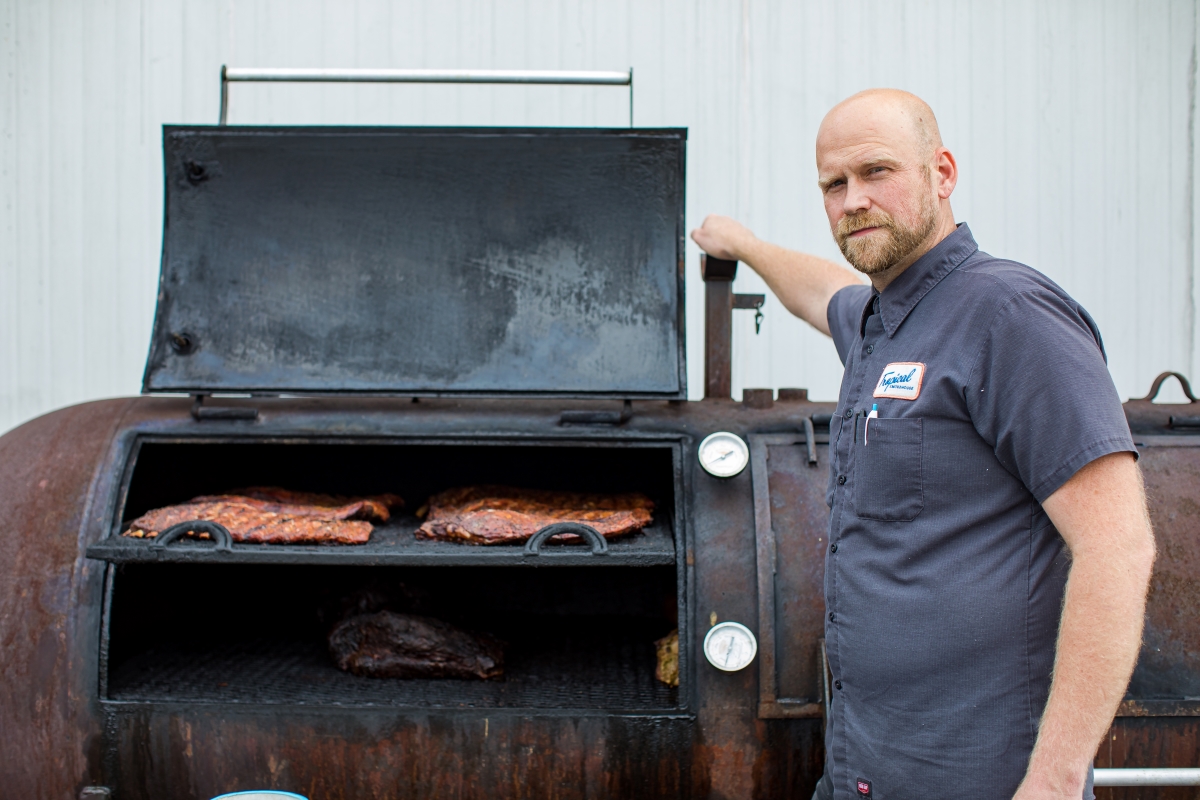
“The food story of the South is very unique,” says Chef Rick Mace. “It is one of the richest food heritages that we have in our country.”
Chef Mace, the owner and executive chef of Tropical Smokehouse, is eloquent and uses his high-pitched, raspy voice to its fullest potential, the way Al Pacino does to make a point.
“There are things, in and of themselves, that are recognized by the world, such as Bourbon and country ham—things that started as subsistence products that were done in common households, and they’ve been practiced, preserved, and respected to the point where there is now a stage for that type of thing.”
Chef Rick Mace – a Great Lakes man – grew up on his family farm in Ohio, where he learned to appreciate simple foods and simple flavors. His taste buds developed as his culinary career took off, steadily increasing. He started working with Chef Daniel Boulud, a renowned French chef and the eponymous owner of Daniel, a two-Michelin-star restaurant based in New York City.
That set Mace on a trajectory to success. Boulud, who also owns restaurants in New York City, Boston, Washington, D.C., Palm Beach, Miami, Toronto, Montréal, London, Singapore, and Dubai, passed on his simple yet elegant French cooking techniques to Mace. It didn’t take long for the young chef to take that training to heart and develop a style of his own with elegance and finesse.
Mace was so smitten with Southern culture and cuisine that before he relocated to Palm Beach County in August 2013, he spent some time in Tennessee. He had what he terms “his moment doing that.” And then, he accepted the call to be executive chef at Café Boulud. Relocating to Palm Beach County was a smart idea, he says.
A convenient place for him and his young family: “There’s a healthy home-work balance here because of the seasonality, and it kind of gets slow in the summer. I enjoy that!”
He came to Florida, the southernmost state, and yet, as he notes, “In Florida, the farther north you go, the farther south you get!”
So, why settle here? His answers reveal his passion and admiration for the tropical setting that inspired his restaurant, Tropical Smokehouse.
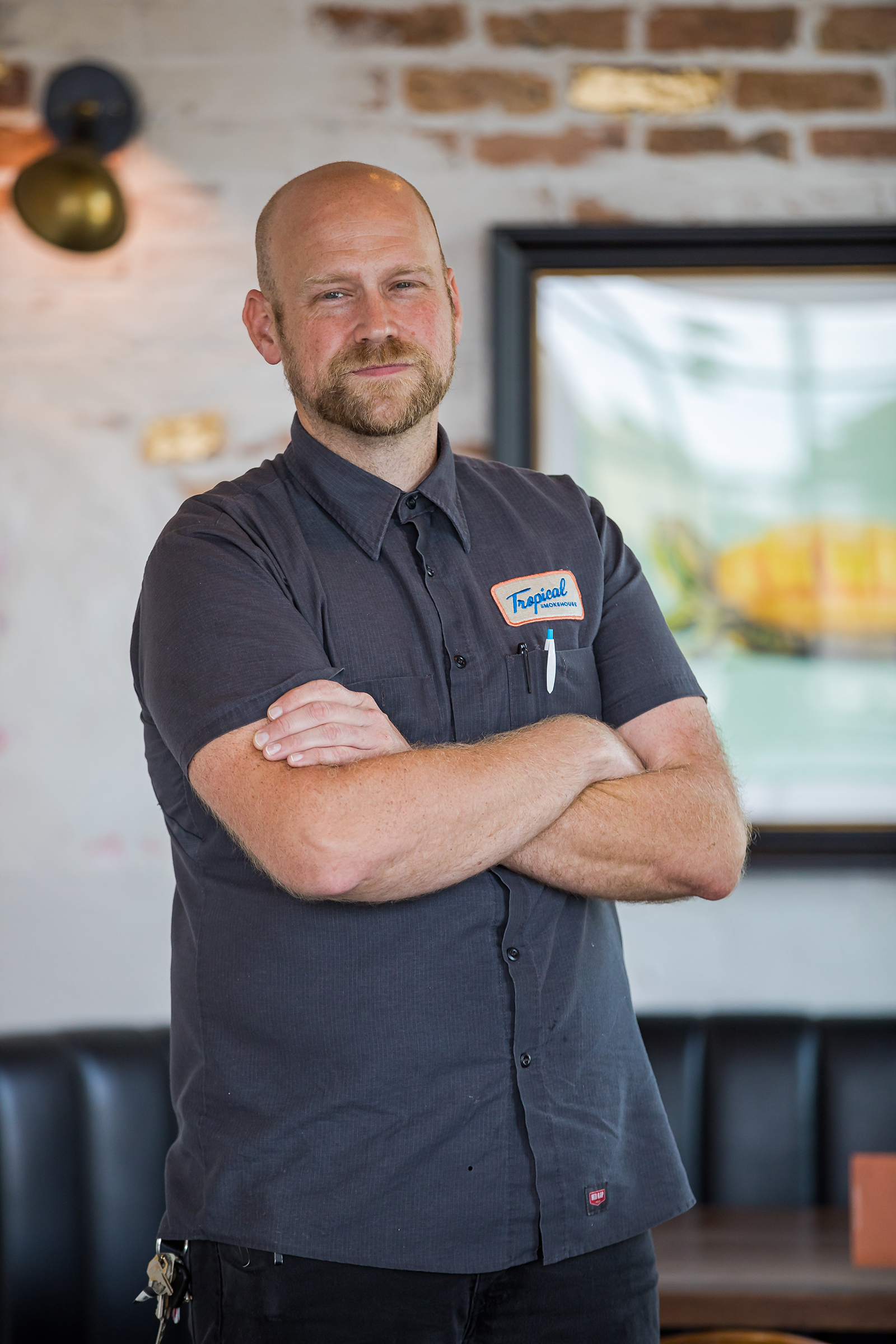
Chef Rick Mace at Tropical Smokehouse, located at 3815 S Dixie Hwy, West Palm Beach, FL 33405
What prompted you to create your own version of a deep south barbecue restaurant?
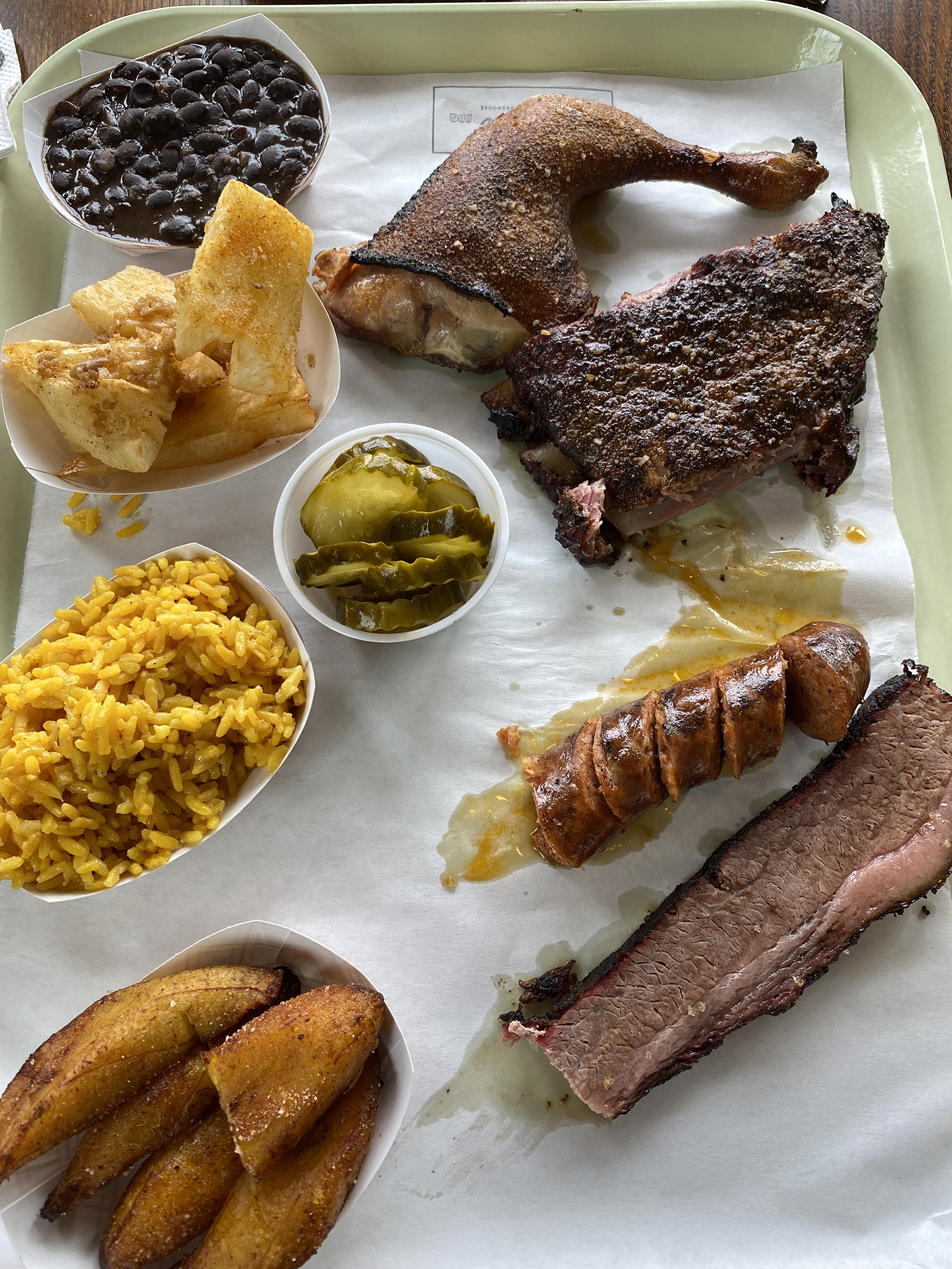
Tropical Smokehouse offers simple foods and simple flavors, but it is not a deep-south-style barbecue restaurant; this is South Florida barbecue. We don’t have some of the staples you see in other smokehouses, like jams, baked beans, and the like.
We’re serving black beans and rice, yucca, and plantains—all those dishes that are commonplace here in South Florida —giving our dishes a unique flavor. We play a lot with our dishes. We take a lot of creative liberties because we don’t feel we take ourselves seriously enough to have an authentic pedigree for everything we do here.
So, a lot of it is cues and inspiration. Like the jerk-up we put on the turkey or the mojo we use on the pork—both add to our flavor collection. It also melds well with barbecue and allows us to curate a menu that is Florida barbecue, if you will.
In 2013, you were recruited by Chef Daniel Boulud to be his executive chef at his restaurant, Café Boulud, in Palm Beach. Chefs are typically known to stay in a place for about three years before moving on. What made you not only stay in the area but also create something of your own with Tropical Smokehouse?
My wife and I think West Palm Beach is a great place to raise our two daughters. They were pretty young when we moved here. Now, one is a junior in college, and my youngest is in middle school. After some time, we decided to settle here.
When it passed the three-year mark—for me, that has been the time progression in my career when I have traded up jobs. So, when that time came, I realized I had reached that mark and fulfilled everything I could in that kitchen and in that role. So, I worked long, and when I reached year five, I was sold on the idea of staying here in Florida.
Two years passed after that, and so after seven years, I decided that it was time for me to move on. I felt I had done everything to contribute to that restaurant, so I had been compelled to do something on my own all along. And I felt I had been preparing for it more or less. I got to the point where I had the confidence I needed to take that on.
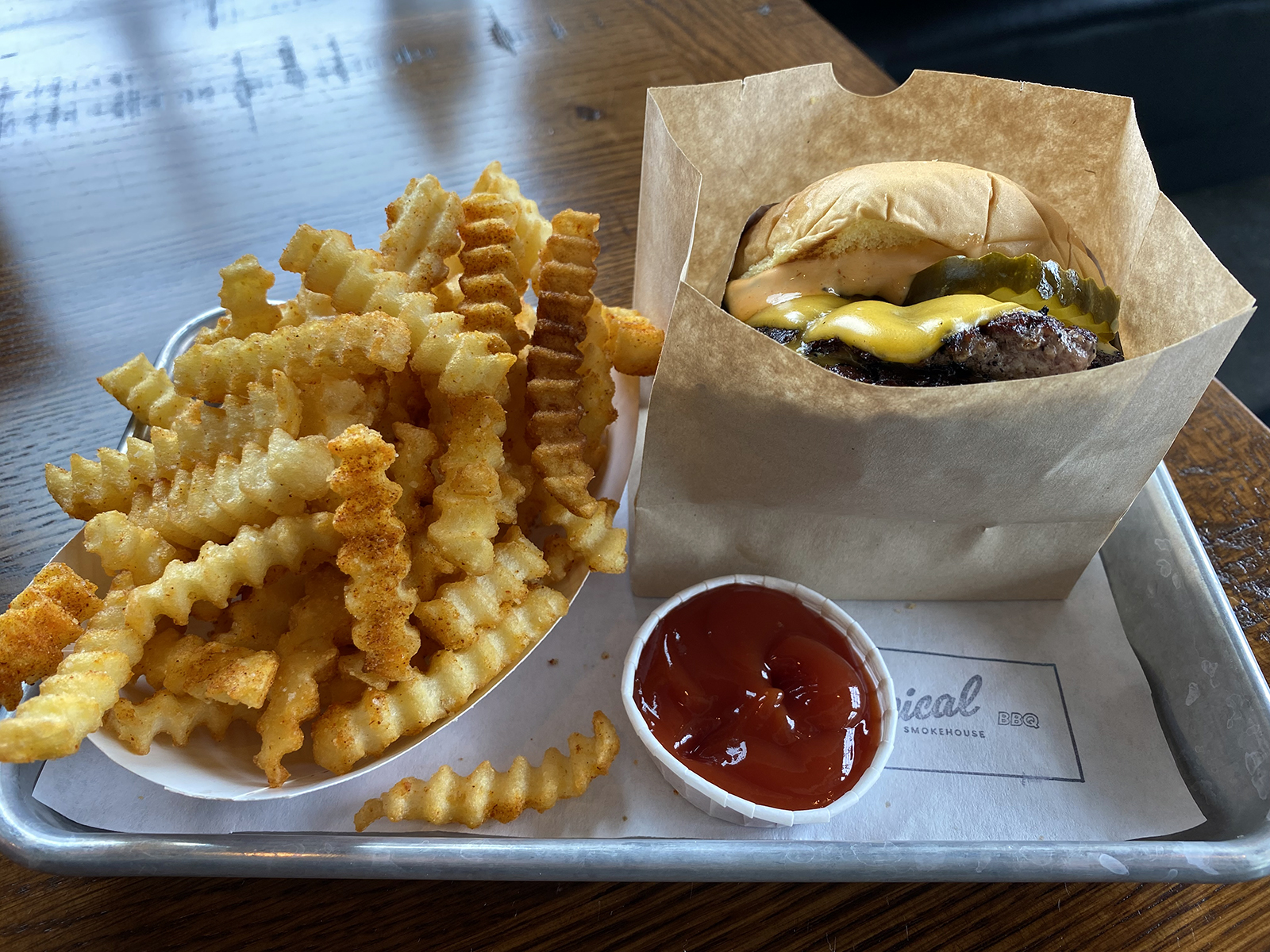
Burger and fries, one of the top sellers at Tropical Smokehouse, West Palm Beach.
How did this project come about? And what led you to partner with a former Café Boulud colleague to create Tropical Smokehouse in West Palm Beach?
I had worked with Jason Lakow, who was one of the GMs there. He left Café Boulud to open a restaurant here called Mazie’s, which was open for about three years.
It was severely affected by the pandemic, to the point that they were contemplating an endgame for it. I knew they wanted to rework the space and introduce a new concept. So, I reached out to Jason and told him I had an idea for a casual concept I'd like to explore.
After a year or so of back-and-forth, I figured everything out, and we opened a year ago today [January 21, 2021]. That year has gone by very quickly. We’ve cooked a lot of barbecues this year. We’ve had a lot of fun, made a lot of friends, and we’re just so happy to be here and be a part of the neighborhood.
How has the neighborhood reacted to you being here?
We’ve received so much love from everybody here. Every day, I hear that people are here for the first time. This tells me we’re doing a good job because people are talking about us and people are coming in. There are many dining options in the neighborhood. Downtown West Palm Beach is not that far away.
We’ve got Lake Worth Beach to the south, and along the Dixie Corridor, there are tons of restaurants. So, we’ve received a lot of support. Still, South Florida is somewhat seasonal, so I’d like to see us attract a few more customers in the summer. But, other than that, last year was our first go-around, and I know it will be better this year.
You grew up on a farm, so how has that impacted the way that you view cooking and the ingredients that you use in your dishes?
The relationship between farm and food is something that’s paramount for anyone who is serious about cooking. Growing up on a farm, you understand that a relationship is about much more than just the end of the meal.
So, I had known a lot about food before I started to cook, by virtue of living on a farm, raising animals and chickens, harvesting a garden, my family farm’s crops, hunting, fishing...
My grandparents lived on the same piece of property where I grew up. They have passed now. They had a root cellar. Long before there were refrigerators, people used a variety of techniques to preserve food.
My grandparents used root-cellar methods like pickling, curing, canning, and dehydrating to preserve food. Today, rooftop cellars are much more romanticized.
So, when it came time for me to decide to pursue a culinary career, I worked until I found myself around like-minded people who took these things very seriously. Growing up on a farm really gave me a holistic view of the whole process; one doesn’t exist without the other.
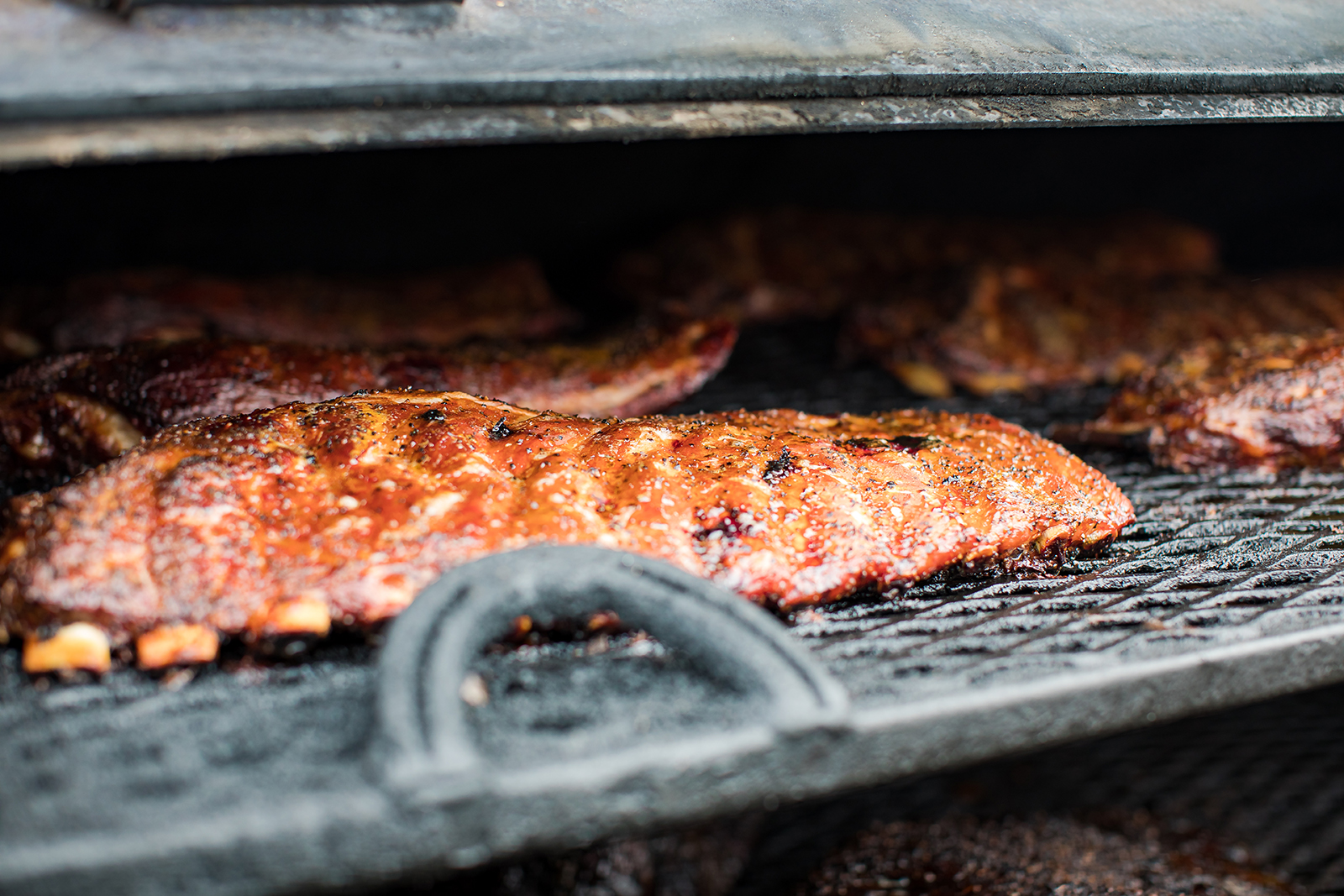
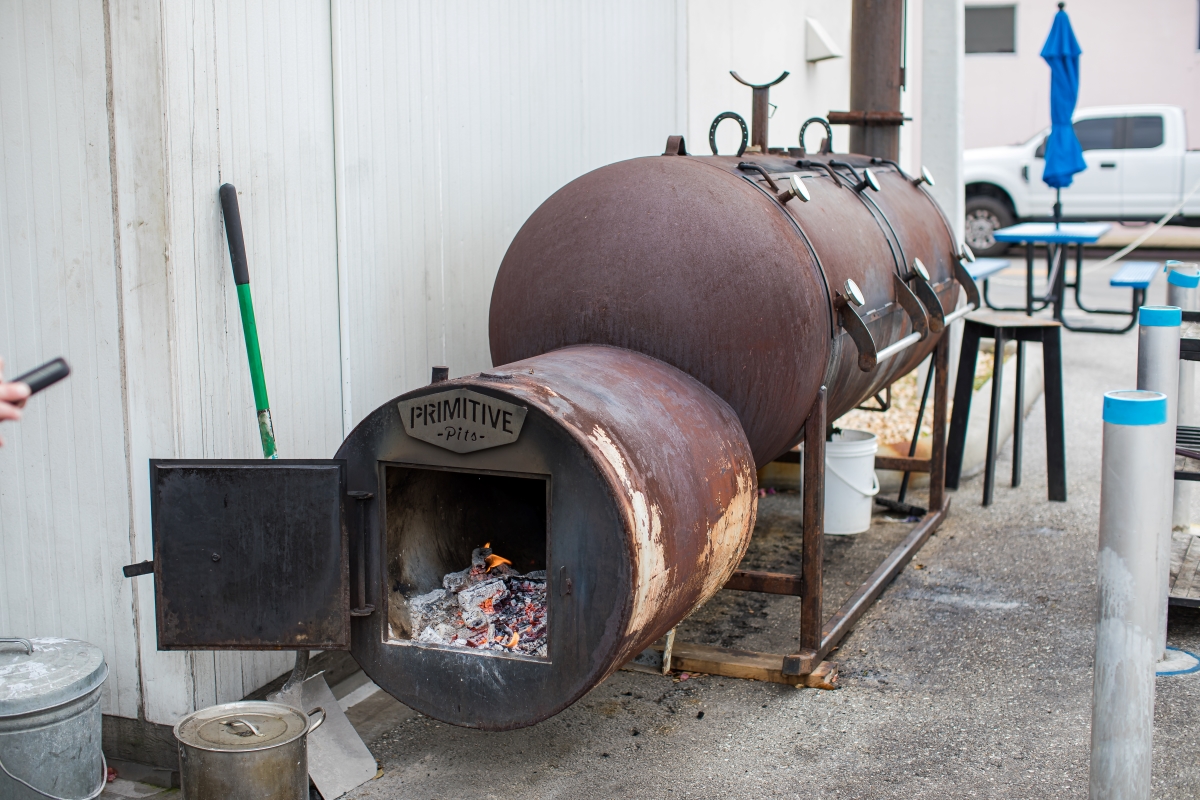
Primitive Pits being used at Chef Rick Mace’s Tropical Smokehouse.
How was your experience working with Chef Daniel Boulud?
Fantastic.
He has the same upbringing as I do. He’s from a small town outside of Leon, France. Everything he did with his cooking really resonated with me. Therefore, I gravitated to his technique, and it always struck a balance of rustic simplicity while incorporating so much more to the story.
Part of the DNA of Café Boulud that made it so intriguing to me was that we were cooking French food, but we were also cooking other dishes. Part of the menu featured world cuisine, including Vietnamese, Indian, and Brazilian dishes. That piece, in and of itself, had to do with my tenure there. It was such an interesting place to work.
What started your fascination with Southern cooking?
When I was in culinary school, I got a book called “Frank Sitts’ Southern Table: Recipes and Gracious Traditions from Highlands Bar and Grill.” Frank is the owner and executive chef of Highlands Bar and Grill, Bottega Restaurant, Bottega Cafe, and Chez Fon Fon in Birmingham, Alabama.
His classical training combined southern ingredients with French techniques in a way that I found very special and unique.
It’s based on very humble ingredients: pork, beans, chicken, and the like. He has such refinement and elegance that it just resonated with me to the point where I wanted to be a part of that.
The food story of the South is very unique.
Oh, yes! The food story of the South is one of the richest food heritages in our country.
The tropical twist is what gives your barbecue brand its true identity. That was one of my major points when we opened. We smoke fish and all of that as well, which is a big part of what we do. I just didn’t want to be the next local restaurant to be playing the “greatest hits of barbecue.”
I find those menus redundant and uninteresting. I think it’s hard to celebrate your surroundings by doing what someone else does. That’s what we wanted to do regarding the brand's identity and how “Tropical” came about. I think it’s been really well received so far!
What are the most popular dishes on your menu?
You know, a chef's creative impulse doesn’t necessarily lead to the best-performing dishes. However, we’re just as popular for our burgers, bowls, and salads as we are for these exotic dishes that we’re bringing to the table.
Our burger is our number one top seller. It has a lot to do with the fact that we are open from 11 am to 9 pm. I sell a lot of sandwiches during the day, but the burger is super popular.
When we opened the restaurant, I had already owned a house in this neighborhood for six years. One day, I looked at Jason and said, “You know, there isn’t a great burger on Dixie Highway. And we should make a burger.”
So, we’re doing the old-fashioned burger—smashed on the grill, topped with American cheese, pickles, onions, and sauce on a potato roll. That’s it! It’s a very simple type of burger, but it’s one that I like to eat. It’s been very well received! So, I have to give it its due. As far as barbecue, pork, and ribs. We also sell a lot of briskets.
Do you think that’s having its heyday in terms of popularity?
Brisket is something that people just really like. We didn’t have it on our opening menu, and we got a lot of feedback on it, so we added it! I told my staff, I’m adding it, but I’m not working a third shift here, people! [laughing]
Typically, a BBQ restaurant that serves brisket cooks overnight to do that. So, we figured that out on our own. And we put our mark on it, so we’re using a coffee barbecue sauce made with Cuban coffee. It comes out really strong and pairs well with the brisket.
The homestyle things that you do here also go really well.
We do a lot of hush puppies and mac-n-cheese, and we serve them alongside black beans and rice, plantains, yuca, and everything else. Yuca Frita is a big seller here. We boil it first, and then we fry it. When it comes out of the fryer, we season it and add garlic butter. It’s kind of chunky and delicious!
Now, I’m sure you know the history of this space. This used to be a Burger King—the neighborhood hotspot. As a kid growing up here in West Palm Beach, I used to walk here with my family to grab a burger and fries. I lived on El Vedado, just a few blocks from here. It feels wonderful that you brought this smokehouse here with your delicious burger. . . full circle. What’s been the reaction from other locals?
Many people like you have shared the history of this place with me. One of the pastors from Family Church in Downtown West Palm Beach told me that he worked here when it was Burger King. He definitely was excited! He was like, “That was my Burger King!” Even though we didn’t replace Burger King, having this space come full circle from a very standardized restaurant to a very localized one is a beautiful thing.
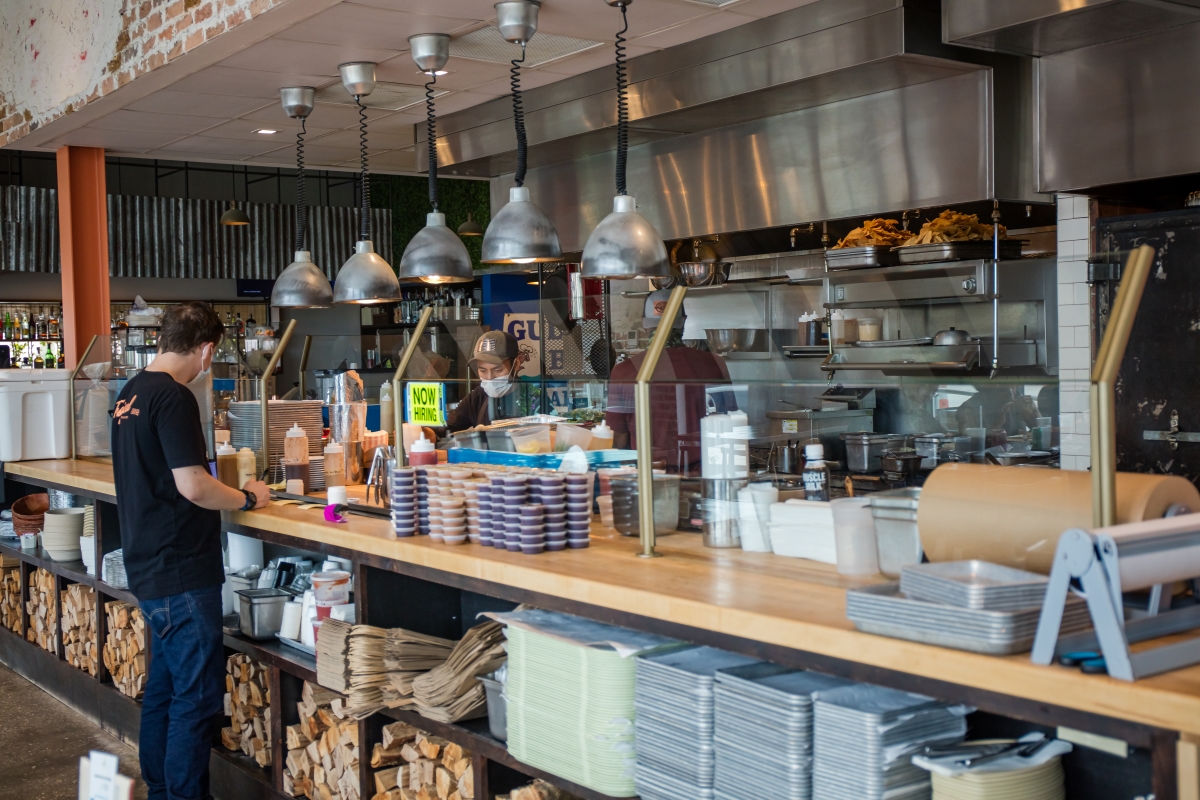
Now, let’s take a peek at your kitchen. You spend a lot of time here. What makes for a good working environment?
Creating the environment is critical. A good kitchen should have a neat appearance and a professional tone.
What are the best tools every chef should have in their kitchen? What are your top three?
Knives, Thermometer, Notebook.
What inspires your culinary creations?
At Tropical, we take cues from our surroundings, from the smoked fish to the Latin influence; our BBQ should express a sense of place here in SoFla.
What is your signature dish?
The old-fashioned hamburger is probably the signature dish of Tropical. I love food that’s nostalgic.
What is your least favorite dish to prepare? And why?
Dishes are like a chef’s children; there really cannot be favorites. Each should receive due care and attention.
No discerning menu would be complete without a great dessert. What dessert likes to make an appearance on your menu?
My Key Lime Pie is the one dessert that has been on our menu since we opened. In the summertime, we dip it in chocolate and freeze it on a stick.
What’s your overall cooking philosophy?
Patience. BBQ is the epitome of patient cooking.
How you devise and evolve your menu, which may nod to the locality and the season.
We take cues from the season, like hot dogs and frozen pie in the summer, brisket chili, and our game dinner in the fall. The heart of our menu is static, so these embellishments add interest year-round.
Why is it so important for chefs to work with regional suppliers?
Again, sense of place. Also, being a part of our local community of chefs and farmers.
What was your experience like at last year’s Palm Beach Food & Wine Festival?
Chefs Marc Forgione and Larry Forgione graciously accepted my invitation to cook dishes inspired by Florida and the Caribbean. The Palm Beach Food and Wine Festival is an event I’ve been part of for eight years now. But it was the first time that it was my restaurant and I hosted. The event and the chefs that came out were like family. And that was such a special thing by itself to have Chef Larry, Mark, and Barry Forgione all in the kitchen cooking together. The energy they carried was amazing. Super proud of the food that we were reviewing.
They’re all American chefs, especially Chef Larry, who is one of the forefathers of American regional cooking. I told him, “You’re such an iconic chef; would you mind giving your expression of South Florida on the menu?” They graciously accepted that ask, and we did a menu that I think was kind of the epitome of what we’re trying to do here. It was a lot of fun!
The menu was extensive, and I probably won’t remember it all. However, we served everything that you could think of from Florida, like duck, fox tail, alligator, topped with all those Caribbean flavors. It was a really cool experience to showcase here.
Why do you think food festivals are so popular with people, and foodies in particular?
Most of the events are special because they are one-offs. The guest chefs make it really special. One meal was prepared for that evening and never repeated.
If you were to choose a dish to describe your personality, what would it be?
Biscuits & Gravy. Smoky and Warm, but a little salty.
Share a cooking tip or technique with our readers.
Cooking tips are a dime a dozen, but I’ll give you the one that I think is most important. At the same time, if you take it at face value, I really don’t think it’ll teach you that much. Working with the highest-quality products is probably the most valuable thing I could convey to someone.
What we do here at Tropical, you won’t see at many places, especially at a barbecue. We commit to sourcing the level of product that we do. This is simply because I believe that the quality of your input determines the ultimate quality of your finished product.
We’re in a competitive market that is unilaterally filled with commodity products and meats. Not that there’s anything wrong with that, but the only way we can elevate it, if we’re all serving the same product, is by adding our own small touches and finishes. Which isn’t really how I cook.
My cooking is more about simplicity than secrets. So, we’re serving pasture-raised chicken, natural pork, and prime beef. We serve products you’ll be served on the island [Palm Beach], at some of the nicer tables that people pay a lot more to eat at.
I firmly believe that if I can deliver that level of quality in an approachable format, it would speak for itself. So, sourcing the best products is, as far as cooking is concerned, the greatest memory that you will create.
Final Word.
We’ve had such an amazing first year, and in the lifespan of a restaurant, we’re still in our infancy, if you will. We will continue to explore what we are doing here and to express, through food, a sense of place and ties to the community around us. And hopefully, we will share news about our ideas for growing.
——
Meet the Chef
Name: Rick Mace
Nickname: The BBQ King
Location: West Palm Beach
Restaurant(s) affiliation and location: Tropical Smokehouse
Hometown: Medina, OH
Years as a chef: 20
Dishes you’re re-known for: All things pork, smoked meats, and fish
Social channel: Instagram – @rick.mace
[As [pubished in WPB Magazine. Photos by Addiel Perera Photography.]