
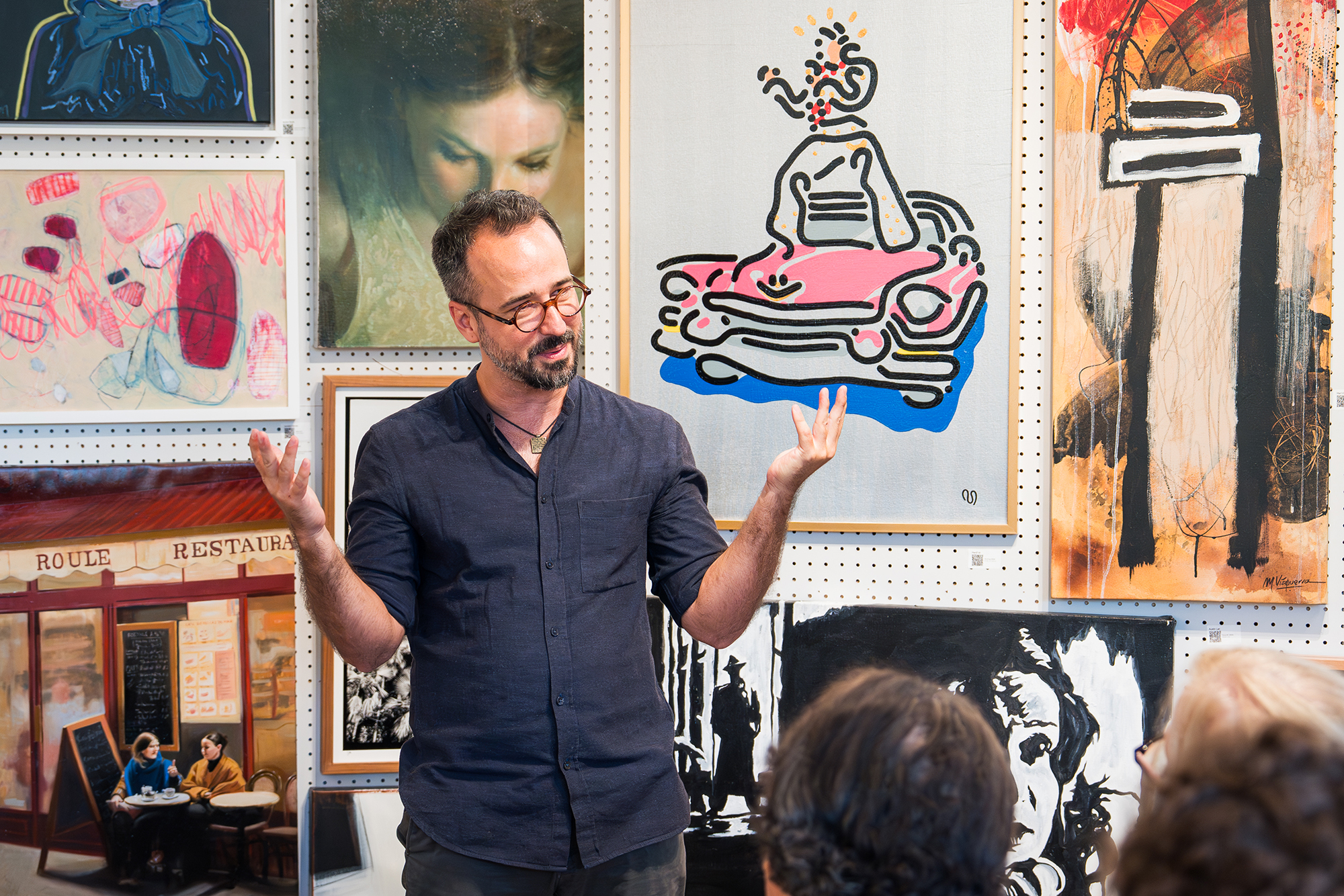
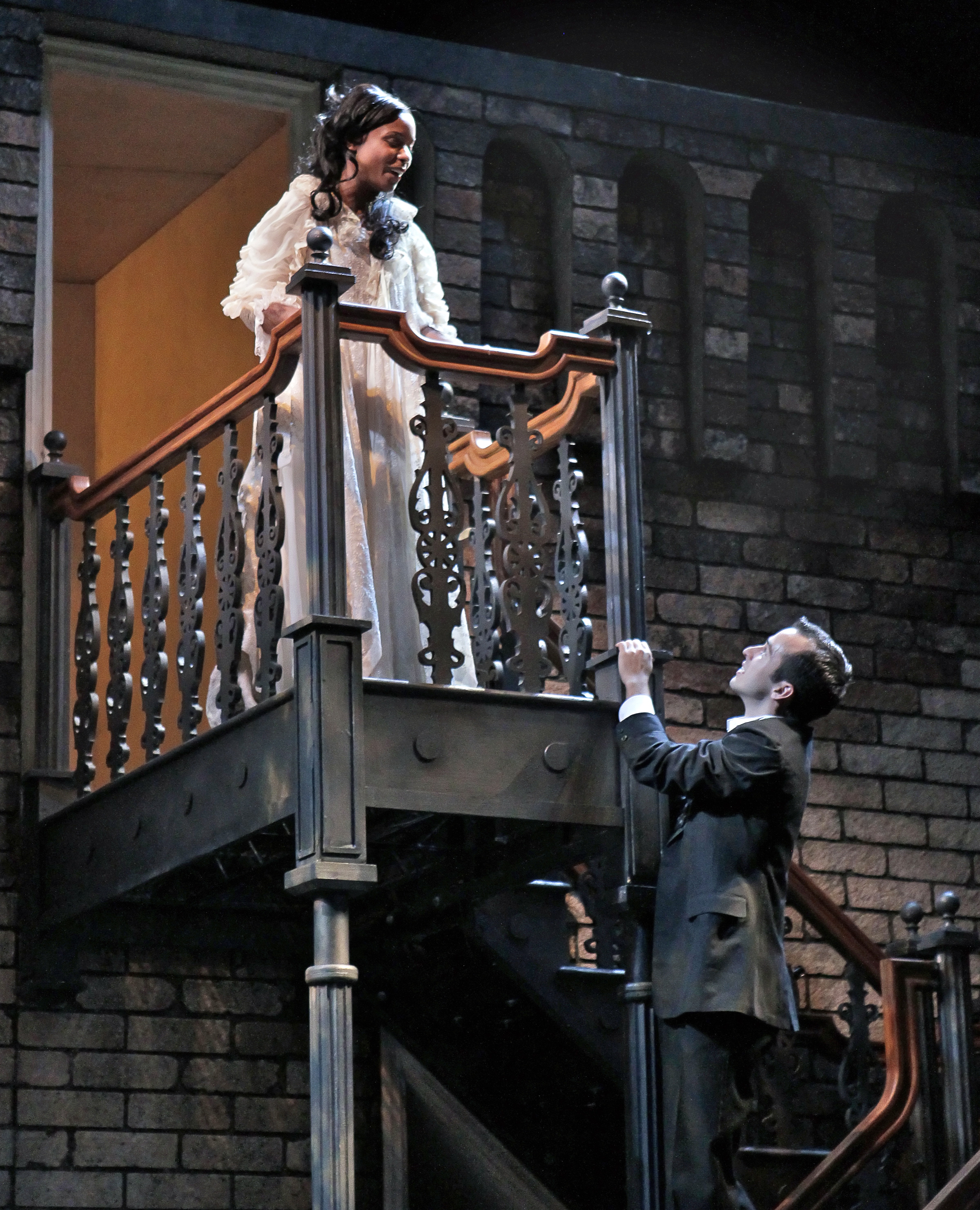
For an artist who never expected to become a playwright, Alejandro Rodriguez is doing just fine. He is a Core Writing Fellow at the Playwrights Center and a finalist at the O’Neil National Playwrights Conference for his new world premiere play Alba, which is now premiering at Palm Beach Dramaworks.
In an in-depth, slow-paced interview from his Coconut Grove home, the Miami-born Cuban American wordsmith opens up about a passion he discovered on his way to Juilliard. We talked about the craft of writing and how his hometown and Cuban roots shaped him as a young man, and about how those experiences shaped his artistic vision as a writer. After all, the writer's function is to remember, to draw from emotional memory.
In his play Alba, Rodriguez writes about what’s true to his life: Cuban passion, funny expressions, and the struggles and sorrows every Cuban immigrant knows so well.
Maritza Cosano: Alejandro, I believe a playwright is partly an actor, projecting their acting skills onto different roles through different actors. As an actor and a playwright, do you believe that?
Alejandro Rodriguez: That’s an interesting question. And yes, I do.
MC: Your play Alba is simply beautiful. An immigrant’s story, well-crafted. Did you always want to be a writer?
AR: I find it funny that there are all these other sort of industry-related aspects of writing that I'm only getting to know more and more, as I travel the country. I've always written, even before I had any idea it could be a profession. I remember writing rhymed poems in first grade and giving them to my parents and teachers as gifts. I got into slam poetry when I was a little older, and I did performance poetry. But this was long before I thought about being paid for it. It was just how I expressed myself. Theater was always on my mind, though.
MC: So, when did you decide you wanted to be in theater?
AR: I wanted to be an actor. The decision to be a director and writer came later and was a little más complicado. I decided to go to college for it and attend conservatory. And there were mixed feelings about that in my family about whether that was a good choice.
MC: No, ¿verdad? [chucking] I can just imagine that scene—your Cuban family and you telling them that you wanted to be an actor. Qué drama.
AR: [Chuckling] Exactly. But I stuck to my guns; I think partly because I knew that, one, theater artists go off and—yes, they write plays and sometimes TV shows and movies, but they also do many amazing things. They become nonprofit executives, journalists, mayors, and even presidents. Theater is special. It's such a special way for us to come together and tell our stories. And so, I said, “I'm moving to New York, Mom.”
MC: And you did just that in 2005. How was your experience at Juilliard?
AR: Intense. The other artists there are extraordinary; it's amazing to be surrounded by such talented, hungry young people. Like, you'd go to class to go to your scene study class, and you'd be walking by people playing Chopin and Mozart, or you'd walk by the studios, and somebody's doing the most incredible movement in the dance studio. So it was like, oh, I better work my butt off because these people are talented.
MC: The setting in itself moves you; it inspires you to be better.
AR: Yeah, that's right. The bar is set high. And then, you know, it's also, you're 18 years old, you're in New York, you're finding, you're figuring yourself out. So it was tough, and there were times when I wished I could go back home and eat a bistec empanizado, but I knew it was worth fighting through.
MC: As Cubans, we have a rich literary and artistic history that has shaped global culture for centuries. From foundational 19th-century poets to modern visual-art masters, Cuban creators have consistently used their work to explore identity, politics, and the human condition. I come from a family of poets and writers. And so, is there anyone else in your family who's a writer, or are you the first?
AR: I'm the first. One interesting thing I learned later, when I was older, is that my grandfather was a big fan of a type of improvised sung poetry in rural Cuba called Punto Guajiro. Sometimes it's called Punto Cubano.
MC: Yes, I know it well.
AR: You’ve heard of this, Maritza?
MC: Yes, it seems we have a lot in common. My grandfather, my mom’s dad, was a Punto Guajiro. He only went to elementary school, to like fourth grade, but his writing and poetry were amazing. The Punto Guajiro is the highest representation of Cuban popular music. My mom and my uncle, her youngest brother and my godfather, were also writers, but not professionally. I was the only one in the family who became a writer. We have it in our DNA.
AR: Wow! Yes, it is in our DNA. When I found these old poetry books, I said, “Abuelo, what are these?” And he said, “Oh, those are poetas.” But like your grandfather, they were los campesinos poetas. And like you, even though I was the first professional writer in my family, it was in the family DNA before me, you know?
MC: La chispa Cubana. But then, who fanned that flame? I know you said that you weren’t particularly expecting to become a playwright at that point. You were focused on acting and writing stories. But who were those writers and playwrights later on who influenced your writing? The ones who taught you something worth learning about writing?
AR: What a beautiful question. Only a writer would ask such a wonderful question. Oh, so I would say the first big revolution, if you will, for me as a writer for the theater was finding that there was a whole different world. When I first encountered it, it was called hip-hop theater. It was a strand of American theater largely created by Black and Latino writers. It had verse, movement, dance, and poetry. That was important to me because, up until then, when you're studying in school, you mostly study European or American writers like Arthur Miller and Eugene O'Neill.
MC: Arthur Miller is my favorite American playwright. In an interview, he said the big playwrights had one thing in common: moral sensitivity, unquenchable—burning with anger at the way the world is.
AR: Yes, I learned a lot from Arthur Miller about what a really well-made play looks like. About character development and dialogue. I also love Tennessee Williams, and Chekhov is one of my heroes. But that hip-hop theater, or really poetic theater, made me think. Oh, I can be expressive; I can be imaginative; I can write about people like me. People like Teo Castellanos.
MC: And who is Teo Castellanos?
AR: Teo is based in Miami. He's a Puerto Rican theater artist. And when I was young, I saw a show of his called Northeast 2nd Avenue. It was a solo show. And he played six characters from Miami. And they were people I knew: the jitney cab driver, la peluquera. He made me think I could write stories about my family and the people I grew up with.
Marco Ramirez, also a Miami native, is a friend. He is a Juilliard Playwriting fellow who went on to work on the musical Buena Vista Social Club. He writes for television. He grew up playing the drums, and he writes dialogue that has rhythm. When you look at the page, you can tell how he wants the rhythm to go. And it's such a gift to the actors because I've acted in Marco's plays, and you look at the script and it's like a musical score. You're like, I get it, I get where he wants me to breathe, where he wants me to take pauses. And so, I learned to do that with my scripts too. And I picked that up from Marco.
MC: So, is there a big community of Latino writers in Miami?
AR: Yes, and it's growing. Some writers have Miami in their heart and are doing some of the best theater work. Terrell McCraney is Miami-born and loves Miami with his whole heart. He won an Academy Award for Moonlight, and he currently runs the Geffen Playhouse in LA. He was the chair of the Yale Playwriting Program. He's a genius. Marco Ramirez is a Miami writer. His musicals are touring the country right now; he just played at the Arsht. There are writers on television staffs, but many of them move. Because what we don't have as much of in Miami are the platforms for writers' plays to get done.
MC: Well, I don’t think that’s limited to Miami. Do you think there aren't enough theaters in South Florida because there aren't enough audiences today who can go to the theater? The ticket prices are too high. A lot of people who would want to go, simply can’t. Teachers, for one, don’t make much money.
AR: True. Good point.
MC: So is Alba the first play written by a Latino playwright produced at Palm Beach Dramaworks?
AR: I don’t know if I am the first Latino playwright on their lineup, but it is the first play with an all-Hispanic cast. If the Hispanic plays are good, the Hispanic community will come out and support them. And the Hispanic playwrights are hungry for places to amplify their stories.
MC: Yes, we are. West Palm Beach is lucky to have PBD as a regional theater, which enriches our local culture. It is a creative hub for new works such as your play Alba. What was it, you think, that connected with Bill Haues, the artistic director?
AR: I think the story captivated him. And of course, the cast. On set, they clicked right away. They became like family.
MC: The story was very believable. A Cuban story most Cuban families can relate to. Was there any part of it that came from your family experience?
AR: I'm sure you understand this as a writer; in some ways, every interaction that you have and every memory you hold on to is your material. I can't help but draw on my experiences as a Cuban American in a Cuban household in Miami. But everything from how I saw my friends interact with their parents, how my cousins grew up, and, in particular, one of the things the play is wondering about is, like, how do so many people that I grew up with, how can they love each other so much and be so rough with each other sometimes. ¿Me entiendes? I don't know if you saw that.
MC: Oh, si. I did, and perhaps it’s because Cubans, like most Latinos, are fiery. We love deeply, and we disagree or even hate deeply. That intense polarity captures a very real, palpable energy often found in our Cuban culture. I saw that in all your characters, from Alba to her daughters, and even in la tia y abuela.
AR: I didn’t write it with any intention of asking, “Why are we like that?” But now that I see it on stage every night, I realize the play might be suggesting repression. If you are unable to really be yourself or really love the way you want to be loved, then that's going to create some amount of—tension, violence.
I think many Cubans of Alba’s generation, because of exile, religion, politics, or whatever their reason, felt they couldn't fully be themselves or express themselves. Perhaps I'm just philosophizing.
MC: No, I think you are right on. I left the theater that night thinking about Alba, and I’m still peeling that onion. She reminded me of my mom. A woman who was fun and full of life in Cuba; she was like a princess in her family, and when she came to this country, a light sort of went out for a while, between making Cuban tamales and learning to make me peanut butter and jelly sandwiches.
Even though she was an English teacher in Cuba, she heard only gibberish when she first came here. That line about hearing only “gibberish” in your play resonated with me, and I’m sure it did with many in the audience. A large number of the West Palm Beach Cuban community were there on opening night. That's relatable not only to Cuban immigrants, but to any immigrant in this country. As the writer, as you continue to peel that onion, I think you're going to see a lot of things that the audience is also seeing and appreciating.
AR: I love that. It's kind of what's so special about the writing process. I wonder if you've had this experience when people discussed your books, read your writing, and talked to you about it. You almost learn what's in your stories from others.
MC: Yes, so true. I love discovering new things about my work through others. It makes us better storytellers. So how did Palm Beach Dramaworks discover your work?
AR: The play was given this wonderful recognition as a finalist in the National Playwrights Conference, which is one of the big new play contests. And so they published the names of the writers, and Jenny Connell Davis saw it.
MC: Jenny is the Artist in Residence at PBD. I interviewed her a couple of years ago.
AR: Yes, that’s right. She was always hunting for good new plays. She saw the play was set in South Florida and emailed me out of the blue, asking me to send her the script for Alba. Then she advocated for it at the Palm Beach Dramaworks Perlberg Festival of New Plays, and Bill agreed to do a reading. Over 200 people came from Miami. Bill tells the story well. It was a full house. After that, he committed to producing the premiere.
MC: How did you find the director?
AR: That’s another great story! Jenny said to me, “You have to meet this director who I think will be great for the play.” She put me on the phone with KJ Sanchez. I think another one of the reasons why Bill and Palm Beach Dramaworks were really supportive was that they saw in the Perlbergh Festival that KJ was the perfect director for it.
MC: Perfect match.
AR: Yes.
MC: So tell me about your writing process. Some playwrights have different habits. Some begin multi-draft revisions at 4:00 a.m., and others late at night. I once read that Arthur Miller drafted every play by hand, then typewrote it.
AR: I wish I had something more consistent. My process for writing a play differs for each one. Each play has its own shape and rhythm. Some plays I write in, like one long retreat. I go on a residency, and it all comes out in a draft.
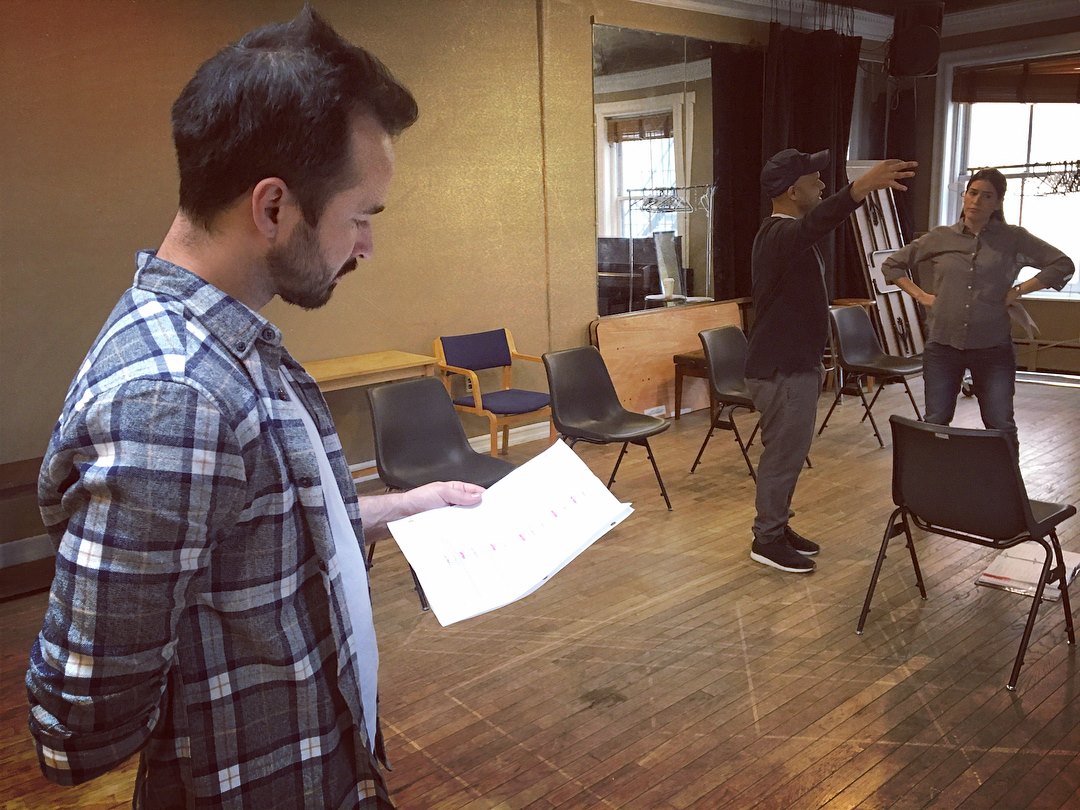
And I really like the revision process because one beautiful thing about playwriting is that, eventually, when the play is ready to be heard, the only way you learn about it is by getting in the room with actors and hearing it.
And the good news is, after being in the industry for a while, I have people I can really trust with my first drafts. The first person who always reads my first draft is my wife because she's the most honest with me.
MC: Aside from your wife, do you have a writers group you can bounce ideas off?
AR: I have a group of people who give me the first round of feedback. After draft two, I start submitting it for development opportunities. Whether in New York or elsewhere in the country. In South Florida, a handful of people support me by bringing some actors together, and maybe a director. I’m a member of the Playwrights Center, and I'm one of their core writers. What's beautiful about them is that, for three years, they've committed to workshop a new play of mine.
MC: That’s awesome.
AR: There are a few programs like that or opportunities to gather actors because that is always the next place you have to go—to find out how your play sounds in an actor's mouth, you know?
MC: Yes, so true. You have to hear the words, see them fleshed out, and discover new lines.
AR: Yes!
MC: What are you working on next?
AR: So there's a play that I did a workshop in Minneapolis and then was read here in 2025 at the Coconut Grove Theater Festival. It's called This Must Be the Place, and it's about a father and daughter who get separated by a big storm and have to find each other in the middle of the chaos.
Then there's another play called If These Walls, about a street artist in Wynwood who gets in trouble and has to make a tough decision: run from the law or stay and face his charges.
MC: Wywood. What a perfect setting for that.
AR: Yes, and one of the play's dramatic ironies is that he’s a graffiti artist in trouble with the law. He grew up in Wynwood, a neighborhood that became internationally recognized for street art and graffiti, so I'm hoping to share that in Miami in 2027.
MC: Can’t wait to see that one. Now, Alejandro, for new playwrights, what advice do you have for them? Where can they connect, collaborate with others, and get their plays read?
AR: There are a few things that come to mind. Follow theaters on social media, since most have ways to keep you in touch with what they're doing. New City Players is based in Wilton Manors, and they do a monthly short play, almost like an open mic, where you can write and submit short plays, and they bring in actors to read them.
City Theater in Miami has a homegrown cohort where you get support over the course of a year or two to get readings of work done. And it's for emerging playwrights. The Miami Light Project has a Here and Now Festival where you can apply to create a 20-minute work. So, there are some places down here that support new play development. The events give you an opportunity to connect and network with other writers.
Then online, there are a couple of resources. New Play Exchange lets you upload scripts, and theaters can find them there. You can reach out to theaters that have submissions. It's like a really great resource to find out what theaters are looking for in plays and put your script out there.
The New Dramatists is another online resource where you can find places to submit your work, grant opportunities, and residencies. I always tell writers in South Florida that we are still part of the national scene, and we can tap into national resources. So my fellowship is with an organization out of Minneapolis, but they consider themselves a national organization.
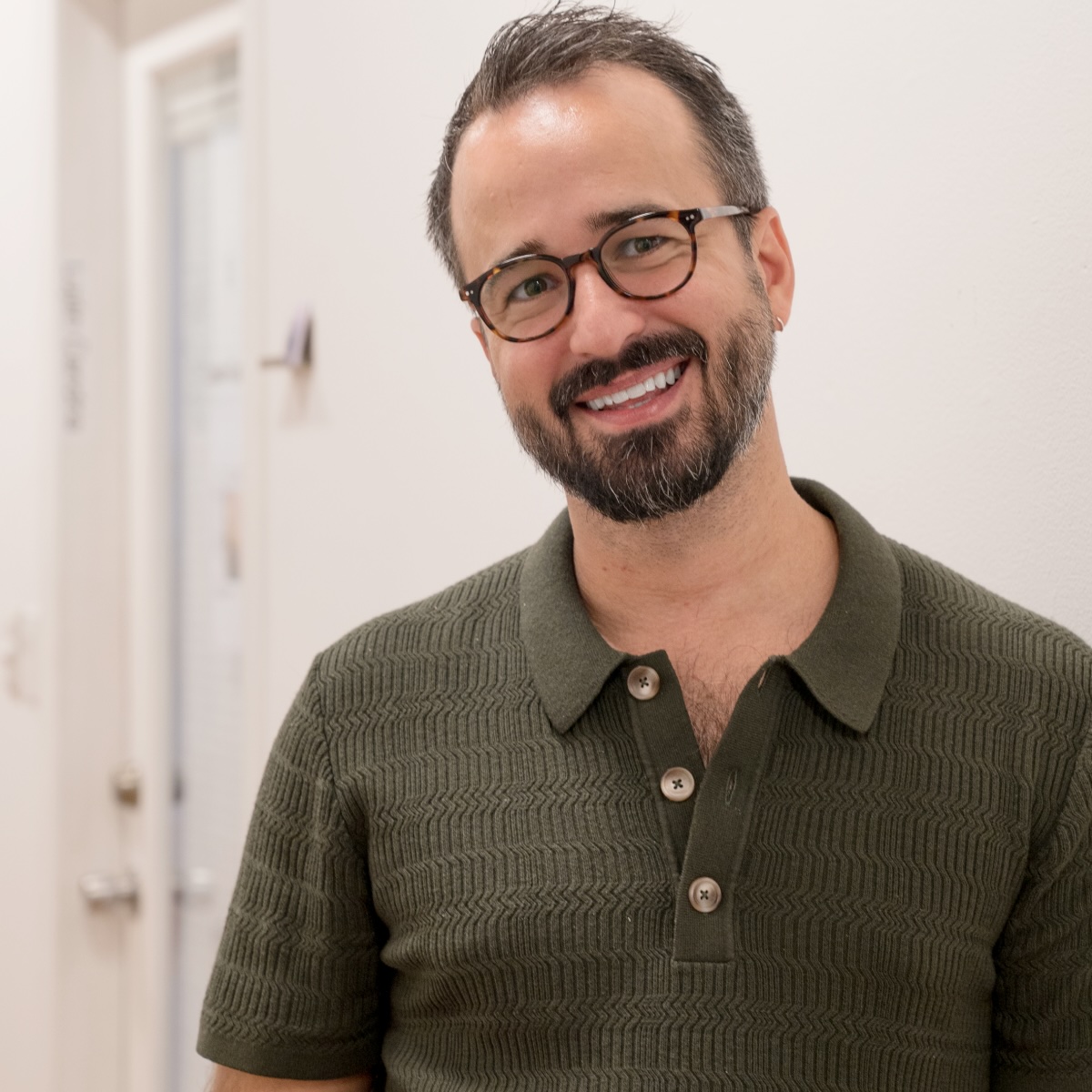
MC: Alejandro, thank you for this great chat and for all those great resources. You know, I’ll never forget your name. My daughter’s name is Alexandra. Another great writer! And my cousin’s name is Alejandro, too.
AR: [laughing] Well, I remember one day I flew up to New York and I sat next to an older American woman, and she asked me my name. I said, “Alejandro Rodriguez.” And she said, "Oh, what a unique name!" And I thought to myself, "Coño! Where I grew up, everyone's name is Alejandro."